Michael Williams
Henry VMichael Williams is an English soldier who tests the claims made for the war against the lives it may cost. In conversation with John Bates before the battle, he refuses to treat the justice of King Henry V’s cause as settled; his later exchange of a glove with the king gives their argument a concrete token that resurfaces after the fighting begins.
Identity and Setting
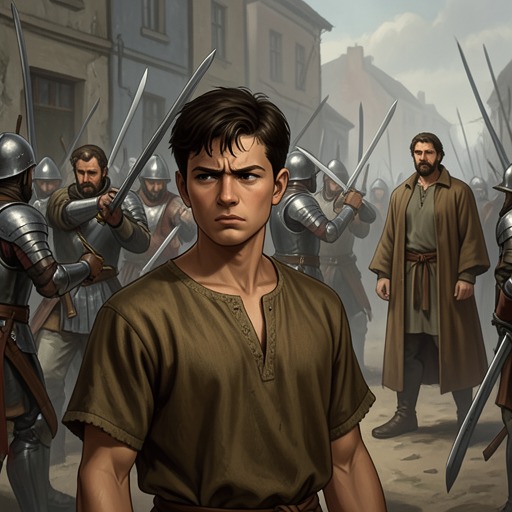
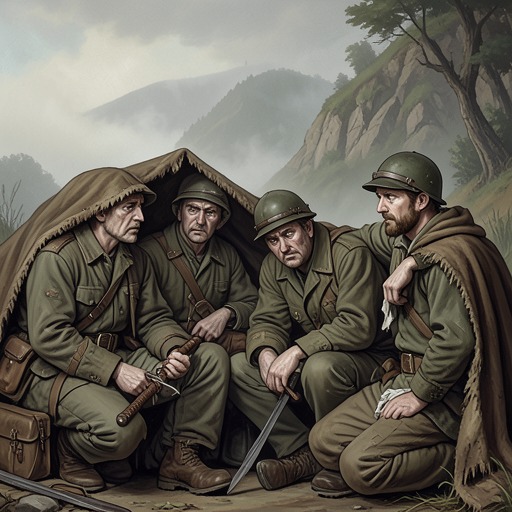
Williams enters among the soldiers John Bates and Alexander Court as they look toward the approaching morning. The scene places him in the ordinary company of the English army, rather than among the counselors who have argued over the grounds for claiming France. His importance comes from this position: questions about royal policy become questions about what the men asked to fight must believe and bear.
The scene is set on the eve of battle, when the king’s presence among his soldiers has made the cause a matter of immediate conversation. Williams is not shown making a separate plan or seeking advancement. Instead, he tests the reassurance offered by another soldier, insisting that the justice of the enterprise is not something the men can simply know for themselves.
The King’s Cause and the Soldiers’ Reckoning
In the soldiers’ discussion, the claim that the king’s cause is just and the quarrel honorable meets Williams’s reservation: that is more than they know. His objection is not proof that the cause is unjust; it is a distinction between a royal assertion and the knowledge available to the soldiers who must act upon it.
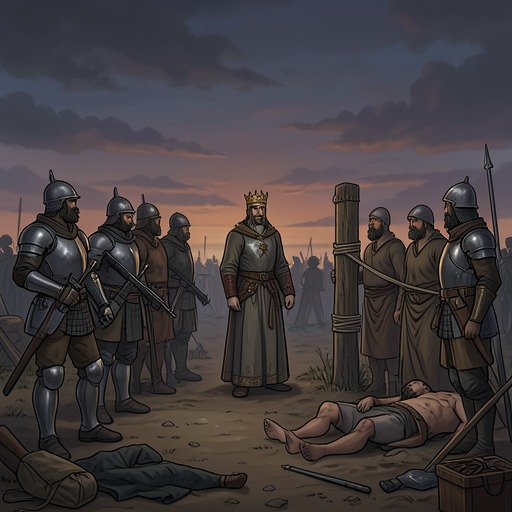
Williams presses the question to its moral consequence. If the cause is not good, he argues, King Henry himself will have a heavy reckoning when the severed limbs and heads of the dead confront him. The force of the argument lies in the image of bodily loss: decisions made in the name of a kingdom return as injuries suffered by individual people. Williams thus makes the king’s responsibility, not merely the soldiers’ obedience, part of the debate over war.
Encounter with King Henry V
Williams’s argument becomes a direct encounter when he speaks with King Henry. Their exchange shifts the disagreement from an abstract question of justice to a personal challenge between a soldier and his sovereign. Williams asks how he will recognize the king again, and the two exchange gloves as a wager. The gesture makes their meeting memorable without resolving the question they have argued over.
Afterward, King Henry sees Williams wearing a glove in his cap and asks about it. The small object carries the earlier encounter forward into the aftermath of the battle: what began as a challenge to the king’s judgment has become a visible reminder between them. Williams is therefore recalled not only for what he says, but for the token that allows the king to identify the soldier who said it.
Narrative Role
Williams gives the play’s debate over the war a soldier’s perspective. The royal claim to France and the language of a just cause acquire a different weight when set beside his insistence that the men do not know enough to certify that claim, and his warning that the king must answer for the dead if it proves false. The glove links that ethical challenge to the king’s personal attention, carrying a moment of argument from the pre-battle camp into the later scene without turning Williams’s doubt into a settled verdict.